How to Pre-draw Picture on Painting Canvas
The number one mistake all beginners make is buying a pre-stretched canvas or canvas lath from a disbelieve bookstore and not unwrapping the cellophane from it.
The number 2 mistake is leaving the canvas white when they start painting.
The first technique I e'er teach in painting (and a technique I utilize on 99% of my work) is to comprehend the white canvas with i solid paint colour which is called a ' toned footing'.
This is short for 'toned background' and is No. 1 of my painting principles.
It tin can be called a 'toned ground' or 'coloured ground' as it tin can exist used in drawing and painting.
Using a coloured ground does a number of fantastic things that are not to be underestimated when starting to learn how to paint.
It tin can transform your paintings by making them await more professional, increase the speed in creating your paintings and give y'all a fool-proof method of creating a tonal mood in your work…Dissimilar artists throughout the ages have used toned grounds in their piece of work, from Turner to Jack Vettriano.
Turner used pre-coloured sheets of watercolour paper with unlike hues (colours) of browns, blues and greys.
When faced with a scene he would look through his pre-painted watercolour sheets and select the most appropriate colour.
For instance, a warm dark-brown for an Autumnal tree scene.
You can utilise a toned basis (also called a coloured ground) opaquely or as a transparent stain (called an Imprimatura)
For our initial purpose an opaque finish is best every bit it stops the acrylic painting looking too 'watercolour'
Pro tip: Information technology is applied afterpriming a canvas with gessoif you're working on a raw canvass.
What colours practice you use for the toned ground?
Information technology depends on the mood and feel y'all're later on in your painting. You're trying to imagine what's underneath the painting and then build opaque layers of color ontop of this.
My preferred choice for landscapes, still life's or portraits nearly always stem from one of the Earth colours. Meet: What are my paints made from?
Usually either Burnt Umber + white, Raw Umber + white or Yellow Ochre.
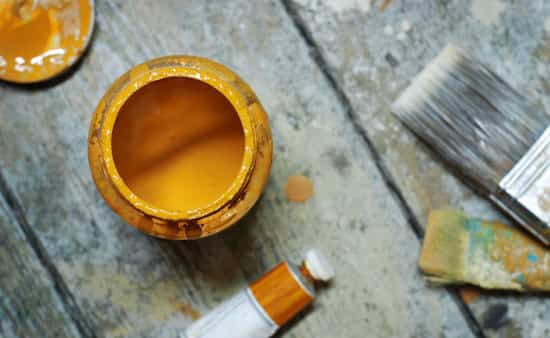
For the absolute beginner, I recommend using Yellow Ochre.
Why?
It'southward usually included in most beginner sets and can exist used diluted with a little h2o.
It's also brighter than you call back then is expert at taking you lot out of your comfort zone.
Using Yellow Ochre tin can crusade some hesitation if you are outset starting painting as the yellowish can seem too strong, but you just need to have a little religion!
For example, if you are painting a blueish seascape the warm undertone of the yellow can balance perfectly to the cool blues in the scene, calculation the feeling of the dominicus hitting parts of your painting.
Pro Tip: If y'all try using the Yellow ochre straight from the tube simply still find information technology a fiddling too strong in intensity for your taste just add some Titanium white to the mix to mute information technology down – it will requite you lot a colour close to Naples yellow.
Are your watercolour techniques ruining your acrylics?
If you're coming to Acrylics or Oils from Watercolour you volition naturally use besides little paint.
Watercolour is based on diluting, Acrylic is based on adding.
If yous combine scratchy, watery paint onto a white canvas your painting volition wait amateurish.
If you have the same scratchy watery paint on an opaque ground colour your painting volition expect rocking!
The coloured ground is doing all the work for you lot.
How does a coloured ground help me?
Bought canvases and boards are nearly always white.
When yous accept a white canvas any color y'all paint onto it looks drastically different because of the optical furnishings and tricks color plays on you.
As a beginner, this tin can be disconcerting. For instance, if you pigment a light grey onto your white canvas information technology will look blackness.
With an untrained artistic heart, it's really difficult to judge colours and tones accurately considering of the furnishings of 'Simultaneous dissimilarity.'
Pro tip: Have a await at the video half fashion down this article to see the effects of simultaneous contrast
How much do I dilute my Acrylics? (and practice I just use water?)
Information technology depends on the brand of paint you're using.
Heavy body paint will need more water than a soft trunk paint. Every bit I use this technique on well-nigh of my paintings I use a fluid acrylic from Aureate paints. This has already been mixed in the manufactory to a sparse consistency and has a adept level of acrylic binder in the paint and a really dainty strong saturation of color. You can add together a touch of h2o into it and it volition nonetheless concord the acrylic bail really nicely.
If you're but starting with the technique using standard Acrylics volition work fine.
Pro tip: Some manufacturers recommend you don't dilute Acrylics with more than than xl – 50% water due to diluting some of the acrylics adhesive qualities (as y'all are diluting the amount of acrylic 'folder' in the mix). However, for this phase of the painting this doesn't matter, every bit we're painting straight onto the canvas. We desire the paint to 'grab' onto the canvas and soak information technology. If you mix in too much medium at this phase it tin can cause a resist to the further layers of paint adhering onto them as easily. Keep the mix thin and 'lean'.
Pro tip: If you lot are finding the paint is pooling in minor droplets on the surface when y'all are simply using water y'all need to add a dash of 'flow release medium' (now chosen wetting agent) to the pigment. This will help to break down the surface tension and make the thin layer of paint soak into the canvas.
How practice I use an Acrylic Coloured Ground?
Time :10 Mins
Level: Absolute beginner
Materials:
Yellow Ochre Acrylic paint ( I demonstrate with Gilded Acrylics Heavy body pigment) white canvas or canvas board, decorators castor (I employ a Purdy 2 inch decorators brush), kitchen whorl (paper towel), water, newspaper, Cranked handle palette knife ( I employ a number 45 RGM palette knife)
Pro Materials: (Tear off the dispensable palette, Cranked handle palette knife ( I use a number 45 RGM palette knife), water mister, Gilt fluid Acrylic.
So here's what you do:
one. Lay erstwhile newspaper on the flooring, or work on a actually old floor or table.
2. Mix the Yellow ochre in a jam jar/quondam mug or plastic tray with water until information technology's the consistency of milk/single foam. Student Quality paints will need less water than artist quality paints.
3. Grab some kitchen ringlet in your left manus (because your bound to get some unwanted drips when you get-go first).
Pick up the sheet. Paint around the edges beginning, trying not to go too much overflow onto the front end of the canvas. Angle the castor to minimize bristles sneaking over the front of the canvas. Employ the paint with a scrubbing move to 'push button it' into the sheet so it soaks into the canvas.
iv. Place the canvas on the floor or low table. Then working quickly brush the paint from left to right to cover the canvas.
five. When you paint in that location will be darker streaks of paint on the border of the sheet because the bristles button information technology out. Y'all take to go on working backwards and forward to shine out the indiscretions.
6. squeeze the brush in the kitchen towel to take out almost of the moisture and so gently go over the sail once more working from left to right, overlapping strokes and lifting the brush at the cease rather than working back and forth.
Watch out for drips on the side of the canvas and if your also enthusiastic sentry out for spray from the brush.
Pro Tip: I premix a whole airtight plastic container with a ground colour so I don't take to mix the perfect consistency every fourth dimension.
Pro Tip: If you are mixing the pigment and the water together don't use the decorators brush, it will pick upwards as well much of the pigment and be tricky to mix together. Try using a plastic kitchen spatula, old paintbrush
Pro Tip : I Use Gilded Fluid Acrylic paint equally it has a stronger staining event than watering downward Heavy body paint.
Pro Tip: If using Acrylic footing for oil paint make sure you add water to the acrylic. Every bit acrylic is plastic based it can cause a skin that the oil pigment volition sit on pinnacle rather than sinking into the canvas.
Pro Tip: If you add together too much paint to the initial layer the paint won't behave the same on the weave of the canvass.
So where exercise we go from here?
You've unwrapped your canvas and got a lovely coloured ground painted. Now nosotros demand to have a quick understanding of brushes so we take the right tools for the job.
Resources

These brushes are off the hook, bright for decorating at home also, come with a little paper-thin 'brush house' to keep the brush in shape betwixt uses. Look out for sets for sale every bit these can be really proficient value.

I predominantly utilize Golden paints as I find the colour saturation really skilful and the Titanium White has some astonishing opacity. They too have a huge range of mediums, Gels & varnishes.
Source: https://willkempartschool.com/how-a-canvas-can-drastically-improve-your-painting/
Belum ada Komentar untuk "How to Pre-draw Picture on Painting Canvas"
Posting Komentar