Advertisements That Make You Think Again
27 Apr You probably think digital advertisement fraud doesn't affect you lot. Remember again.
Posted at 13:00h in Advertising, Magazines
Digital advertizing fraud is costing media companies Us$four.5 million an HOUR. Well-nigh no visitor is allowed, even the biggest. What can you do to detect and foreclose it? Read on.
By John Wilpers | Innovation International Media Consulting, Boston
Your publishing visitor is nigh certainly the victim of digital advertising fraud. Worse, your company may likewise, unwittingly, be an bodily perpetrator or enabler of digital advertizing fraud.
Worse nonetheless, your very own personal estimator could be defrauding other publishing companies, advertisers, and even your very own company. Right now. And all this fraud is costing you a lot of coin and a lot of credibility, both straight and indirectly.
One consolation? You're far from alone. Digital ad fraud affects between 10 and 60 per cent of different types of digital advertizement, according to a variety of studies conducted in 2014.
Another consolation: There are a growing number of fraud-fighting companies dedicated to building innovative tools and practices to catch and, better even so, prevent and eliminate digital ad fraud.
Ad fraud costs $4.5m USD every hour
There is no time to waste.
This year alone, digital ad fraud will cost publishers and advertisers US$half dozen.3billion (yes, that'southward billion with a "b") or U.s.a.$4.v 1000000 every hour, according to a landmark Dec 2014 study by the Clan of National Advertisers (ANA) and digital security firm WhiteOps.
The 2014 written report monitored 181 ad campaigns of 36 ANA member companies over 60 days and discovered hundreds of millions of bots infecting the advertisement of big-name brands including Anheuser-Busch, Ford, Verizon, and Pfizer and costing the afflicted companies millions of dollars in wasted ad spending. The written report analysed more than 5.5 billion impressions on 3 million domains.
No more turning bullheaded eyes
Until recently, digital ad fraud was reluctantly accustomed every bit an unfortunate toll of doing business. But that was earlier the fraudsters ramped up their game and started taking billions of dollars out of the digital advertising ecosystem.
"We have long suspected and have long known in that location was fraud in our industry," ANA president and CEO Bob Liodice said. "Nosotros didn't know the verbal amount or the reasons why it was happening."
Now do we. And it's non a pretty picture. Here are just 2 examples:
1.One well-known British company was defrauded of US$488,000 when its $ten,000/ day 2013 video ad campaign to sell large-name household brands on reputable U.s.a. publishing sites was instead spent on Asian porn sites, according to BusinessInsider.
2. A well-known lifestyle publisher ended upwardly serving 98 per cent of an automobile advertiser's video ads to bots. "Out of almost four,000 total video impressions from the placement, fewer than 100 were served to humans," the report stated. The other 98 per cent were triggered and "viewed" by "bots" or networks of computers infected by software fraudsters can identify in PCs through a variety of seemingly innocent ways.
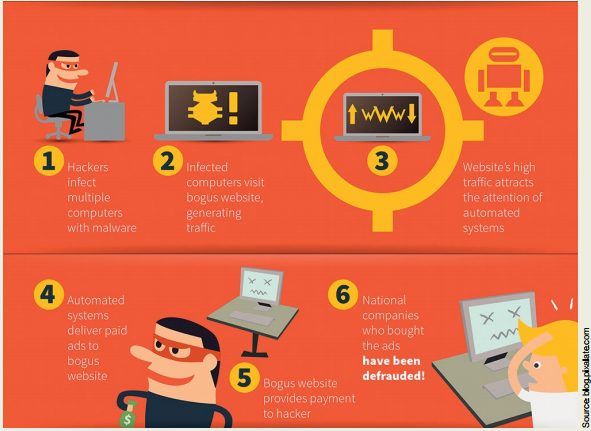
Advert fraud is alarmingly ubiquitous
The breadth, depth, sophistication, and outrageous price of digital advert fraud was laid bare by the ANA/WhiteOps written report:
- Nigh 25 per cent of all video advertizement impressions are fraudulent (viewed past machines, not humans)
- More ten per cent of all digital display ad impressions are fraudulent
- More than half of all traffic purchased by publishers to drive additional unique visitors to their sites is fraudulent (publishers are getting bots non bodies)
- Most i-fifth of all re-targeted advertizement impressions (ads directed at consumers who'd earlier clicked on a company's advertizement, form or content) are fraudulent
- Ii-thirds of all fraud comes from the computers of everyday consumers whose identities and habitation machines have been secretly hijacked past fraudsters
"We have reached a crunch bespeak: 36 per cent of traffic today is generated by machines, not humans," said Interactive Ad Bureau (IAB) lath of directors president Vivek Shah.
Even reputable publishers are victims
Until the ANA/WhiteOps study, many mainstream publishers took solace in the widely accustomed notion that digital ad fraud was limited to low-cease, small-scale, and either sleazy or at least non-traditional digital publishers.
They were wrong.
Even the publishers who took the precaution of selling ads only on what are chosen "private ad exchanges" to tightly control their inventory and allow only brand-consistent advertisers on their sites accept been victimised by fraud. Ten per cent of ad impressions from premium programmatic advertizing campaigns are fraudulent (triggered past bots).
"The surprise [in the report results] was the ubiquity of the fraud," ANA VP Beak Duggan said. "Information technology is not merely no-name websites, simply it also affects premium publishers."
"Advertisers who assume that traffic to premium publishers is gratuitous of bots risk losing large amounts to intentional or unintentional bot fraud," the ANA report stated. "The reputation of the publisher is no longer a reliable benchmark to predict bot traffic level."
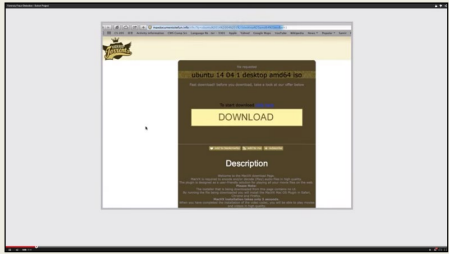
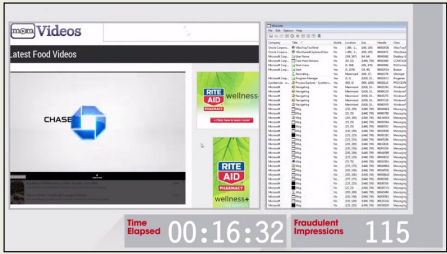
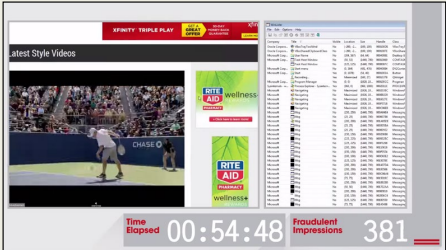
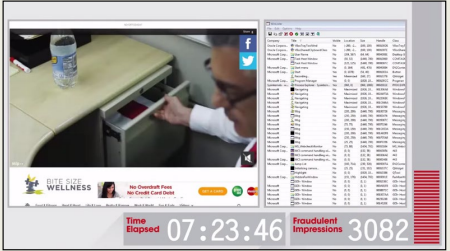
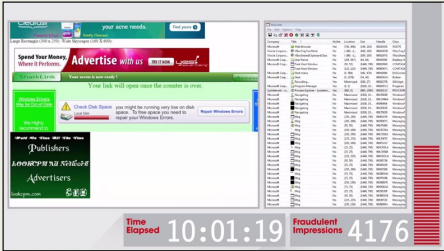
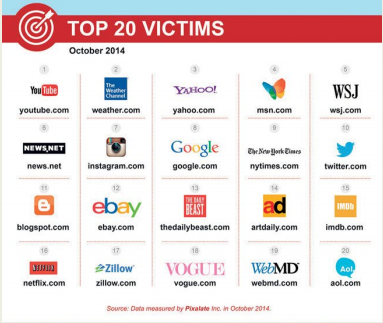
To demonstrate bot traffic in action, ad fraud-fighting visitor Forensiq infected one of its computers with malware, and recorded what happened next. The screen grabs in a higher place show how a single infected "bot" machine loaded thousands of webpages, and a total of 4,176 fraudulent imprint and video advertizement impressions in just ten hours, Forensiq said. Those fraudulent ads included major brands Verizon, Chase, Toyota, Tide, Buick, Aleve, Citi, Comcast, Sprint, Ford, and numerous others. According to Forensiq, the company'due south malware-infected computer received instructions from an IP address located in Frg.
What exactly is a bot?
Let's take a step dorsum: What the hell is a bot?
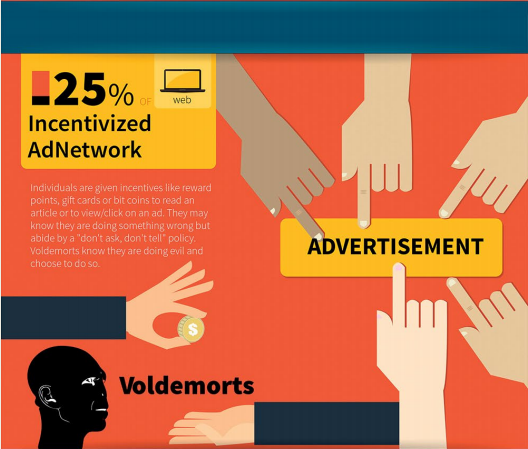
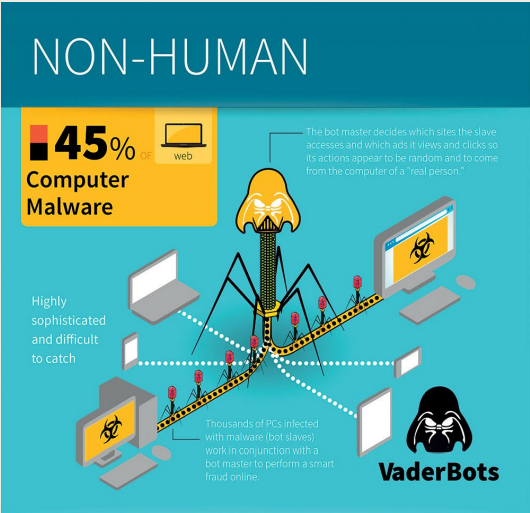
Bots are very sophisticated software programs oft installed on a consumer'due south estimator through seemingly innocent means (eastward.m., offers of free stuff if the consumer will click on an ad, fill out a form, or download a toolbar or browser extension). Those "bots" then "click" on ads or run videos silently in the background (behind the consumer's active web browser screen or even invisibly). The consumers have no idea what'due south going on, other than maybe noticing that their computer might exist running a bit more slowly. The advertisers and publishers think they're getting existent human being interactions.
More sophisticated bots can collect consumer's "cookies" (the URLs of websites they've previously visited or ads they've clicked). Those bots so appear to exist "qualified leads" in the eyes of publishers and advertisers who think the advertisement campaigns are working.
As a result, the publishers and advertisers aggressively "optimise" their ad campaigns around these "consumers," increasing their original entrada spending and budgeting new monies to retarget these "qualified leads." Some advertisers and publishers will even "white-list" those bots, protecting the fraudsters from monitoring and guaranteeing them hereafter business. Advertisers and publishers are actually optimising for fraud, exacerbating and perpetuating their initial loses.
Bots look like grandmas & tech geeks
Some publishers who haven't kept upwards with the development of bots will exist amazed and disconcerted to learn how sophisticated bots have become.
Many publishers believe they have insured their security and are separating human visitors from bots by requiring visitors to blazon in those maddening strings of letters and numbers — "CAPTCHAs" (an acronym for "Completely Automatic Public Turing examination to tell Computers and Humans Apart"). Bots can now fool CAPTCHAs.
Bots can also move a computer'due south mouse and run the cursor over ads. Bots tin can buy things — putting them in shopping carts and actually executing a purchase.
Bots can visit multiple sites generating cookies that make the "user" announced demographically appealing to advertisers and publishers. Fraudsters' program bots can behave like auto buyers, sports fans, rich people, singles, or grandmothers. When fraudsters cord hundreds of infected computers together, they have a "botnet" that generates loftier volumes of traffic and clicks from what appear to be very significant, specific, desirable audiences.
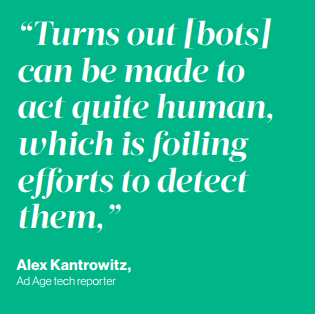
"And then much for bots giving themselves abroad by acting like, well, bots. Turns out they can be made to act quite human, which is foiling efforts to detect them," wrote Aphorism tech reporter Alex Kantrowitz. Bot fraud is the globe's most sophisticated cybercrime, according to WhiteOps CEO and co-founder Michael Tiffany.
Why should magazine publishers care?
Magazine advertising survives and thrives based on trust and results. Advertisers trust publishers because they place their ads in the context of high-quality, relevant content delivered to high-quality, demographically advisable, highly engaged audiences who deliver results.
Ad fraud wrecks every part of that equation: The content and ads are not seen by whatsoever audience and even superlative results are suspect and too often fraudulent.
"The corporeality of bot fraud in our midst is unrivalled in any other industry and is sadly leading to a crisis of confidence on the buy side," wrote advertising security visitor Solve Media CEO Ari Jacoby in Advertising Age.
Six ways fraud hurts our industry
- Brands lose confidence in digital media
- Brands squander money on campaigns that are served to a loftier pct of bots
- Fraud makes campaign success analysis suspect and less useful
- Fraud inflates inventory — other forms of fraud in improver to bots are fraudulent web sites, ad stuffing (hiding ads behind other ads), and ad injection (placing unauthorised ads on other publishers' sites)
- The billions of dollars in advert fraud funds the bad guys' development of high tech tools to defeat publishers' defensive efforts
- Fraud invites government regulation by undermining the perception that our industry tin control itself
The problem is huge, and information technology is not going abroad any time soon.
"Every bit more than ad inventory is bought and sold programmatically on advertising exchanges, bad guys are finding it far easier to commit fraud because few agencies and advertisers actually check in detail the hundreds of thousands of sites on which the ads are run. Information technology's easier to hibernate in a far larger haystack," according to New York-based Marketing Science Consulting Group founder, Dr. Augustine Fou.
What are the types of digital advert fraud?
Industry wags joke that request ten different industry players to define advertizement fraud volition result in ten different definitions. But our inquiry into digital advertizing fraud has narrowed down the types of advert fraud to nine, the largest of which by far is ad impression fraud perpetrated predominantly by bots:
- Ad impression fraud (CPM)
- Search advert fraud (CPC)
- Chapter advertising fraud (CPA)
- Atomic number 82 fraud (CPL)
- Ad injection fraud
- Spoofing fraud
- CMS fraud
- Retargeting fraud
- Traffic or audience extension fraud
1. Impression (CPM) advertizement fraud
Impression advertising fraud has several parts:
• Hidden advertisement impressions
• Fake sites
• Video ad fraud
• Paid traffic fraud
• Ad re-targeting fraud
HIDDEN AD IMPRESSIONS: Hidden ad impressions (as well called advertising stuffing or ad stacking) come up from fraudsters either placing teeny ane-pixel-by-one-pixel windows throughout a web page and serving ads into those virtually invisible advertizing spaces, or stacking layers of ads one on tiptop of the other in the same space just just the top advertising is visible. Some pages observed in the ANA study found 85 ads on a single page where few if any ads were actually visible. Video ads can also be stuffed into 1×1 spaces or continuously looped in stacks then no user ever sees it.
The outcome is a huge ad inventory (tens of millions a day) on ad exchanges, all of which tin can exist sold simply few or none of which are always seen. For example, an AdAge investigation found 2 examples of massive fraud: One fraudulent site (modernbaby.com) offered 19 1000000 impressions per day on one exchange while another fraudulent site (interiorcomplex.com) offered 30 million ad impressions per day on another substitution.
Simulated SITES: Fraudsters create fake sites containing only ad slots and either no content or generic content oftentimes repeated from one fake page to the next. None of these sites draws huge traffic (to avoid creating suspicion) but networks of faux sites sold on programmatic advertizing exchanges can generate millions in revenues taken together.
VIDEO Advertisement FRAUD: The explosion in the popularity of online video has drawn the attention of fraudsters. Fraudulent video ads are also as much every bit x times more lucrative than banner ads thanks to college CPMs. Fraudulent video ads are ofttimes stacked, invisible (the one×i windows), or played in the background (where the consumer can't come across them).
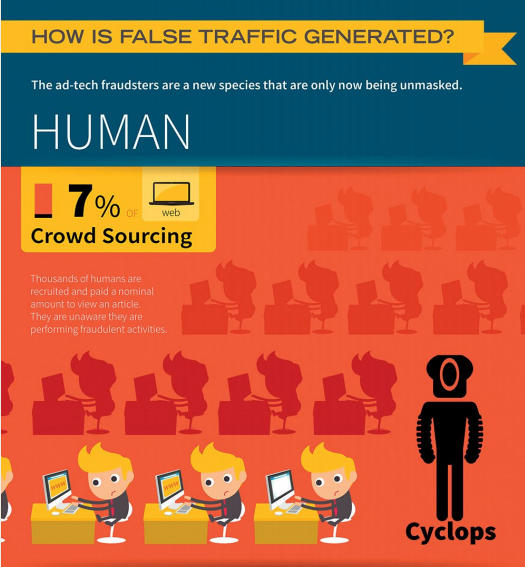
PAID TRAFFIC FRAUD: Publishers buy "traffic" from third parties to generate more unique visitors to their sites. The ANA/WhiteOps study plant that 52 per cent of that traffic is from bots, and occurs most often betwixt midnight and 7am.
RETARGETING FRAUD: Bots can be programmed to mimic specific and highly desirable consumers' online behaviour, such as home- or motorcar-buyers. The bot goes to relevant websites and acts similar a consumer interested in making a purchase, researching topics and clicking on ads, but not necessarily actually making a purchase. That behaviour triggers a campaign of re-targeted ads hoping to convince the "hot prospect" to brand the purchase — but those prospects are really simply bots. Withal, the fraudulent advertizement targeting visitor makes money.
ii. Search (CPC) ad fraud
Fraudsters select the nigh expensive keywords — the ones with the highest toll per click (CPC). They so build their own websites and load them upward with the loftier CPC keywords to generate search ads. The whole procedure is automatic and the sites are generated past algorithm at a dizzying pace to maximise potential revenue. Brands looking to advertise confronting those popular keywords purchase inventory on the simulated sites. When the fraudster'due south bots click on the existent ads, the advertiser gets a report that makes it look like the click came from a real, respected website.
three. Affiliate (CPA) advertizement fraud (AKA cookie stuffing)
Affiliate marketing programmes advantage websites for getting visitors to complete an action such equally filling out a form or making a purchase. Affiliate or Price Per Action (CPA) fraud consists of a fraudster manufacturing fake actions by using bots to direct qualifying traffic to affiliate sites or stuff a consumer's computer with fraudulent cookies then that if that user goes to the affiliate'southward site, the fraudster collects the referral or commission payment. Ofttimes, the stuffed cookies volition override any legitimate cookies and rob the legitimate referrer of earned income.
four. Pb (CPL) ad fraud (AKA conversion fraud)
This is the type of fraud most publishers believe is impossible. Computers can't possibly make full out forms, right?
Wrong. What started with the bad guys employing pocket-sized armies of people in under-developed countries to fraudulently fill up out forms for pennies each, has rapidly morphed into a completely automated fraud industry where bots tin fill out thousands of forms in the glimmer of an eye in a way that fools virtually publishers' rudimentary anti-fraud systems.
five. Advertising injection and AdWare fraud
Not too long ago, a Target advertizing ran right in the middle of walmart.com. Walmart did not sell the advertising, but there it was, big as 24-hour interval, promoting a Walmart competitor on Walmart'due south own site. The culprit was the latest in digital ad fraud: Advertising Injection. Perpetrators of this line of fraud offer consumers what appears to be an innocent incentive, usually a web browser tool bar or extension. Secretly embedded in the tool bar or extension, however, is software that injects onto unsuspecting sites advertisements that deliver no acquirement to the site itself but to the tool bar creator.
 The fraudsters who create these tools do not tell the consumer about this feature of the toolbar or extension. And they certainly do non pay the publishers or brands on whose site the advertisement is injected. Only the fraudsters do list the inventory on programmatic ad exchanges as being on that legitimate publisher's or brand'south site (but they never go the publisher'due south or brand's permission).
Some of the biggest brands and almost reputable publishers in the world take been victims of this blazon of fraud, including Walmart, Home Depot, Macy'southward, Dell, Samsung, Yahoo, MSN, weather condition.com, YouTube, and Yelp, according to Aphorism.
The ANA/WhiteOps written report also found rampant injection fraud, including 1 publisher whose site was hitting with 500,000 injected ads every day for the duration of the ii-month study.
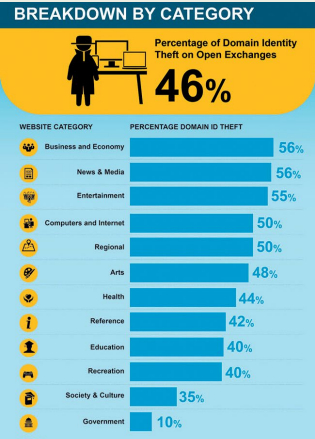
6. Domain spoofing or laundered ad impression fraud
Domain spoofing fraud may be the most insidious and most difficult to detect and forestall, and most lucrative for the bad guys.With a simple line of code, fraudsters can change the URL of sites, even sites on white lists and private ad exchanges, to make advertisers think fake or piracy or porn sites are really the sites of reputable publishers.
Considering advertisers assume that premium publishers are the all-time places for their campaigns, they put those publishers' sites on their whitelists. Whitelists are presumed non only to be the best sites with the best audiences, but also to be a condom defensive barrier against ad fraud. As a result, premium whitelisted sites command top bid prices on exchanges.
Ironically, whitelists past their very nature attract fraudsters. The potential for inordinately high CPMs with lilliputian risk of discovery has prompted fraudsters to find ways to develop code that enables them to mask their fake, piracy or porn sites equally one of the sites on the whitelists.
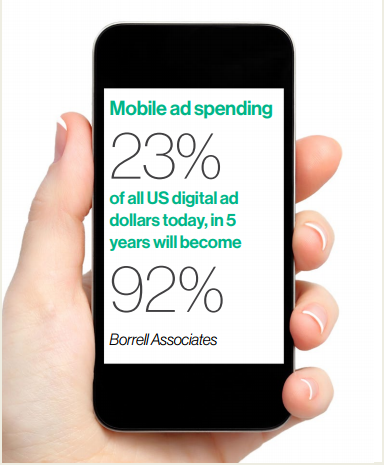
Domain spoofing comes in two varieties
The showtime involves malware consumers accidentally install on their personal computers. The malware actually injects ads windows onto websites the consumer is viewing. In a nanosecond, the fraudster is able to offer that space on what looks like a premium publisher's site out for bidding on an commutation. The price the fraudster commands reflects an incredible disbelieve for such a desirable site. The money for the advertisement flows to the fraudster, not the premium publisher. This type of fraud is difficult to detect because the user really is on the premium publisher's site.
The second approach to domain spoofing involves fraudsters modifying codes in the ad tags that identify the domain a user is viewing. The managers and users of ad exchanges must be able to presume that the advertisement mark-up codes are always accurate. Sadly, such is not the example. Fraudsters can easily delete the mark-upwards code and supervene upon information technology with lawmaking that enables them to impersonate any premium site they choose.
vii. CMS fraud
In this arroyo, bad guys hack into a publisher's content management system (CMS) and create their own pages using perfectly legitimate domains. And so they put those pages on ad exchanges with the premium publisher'south mark-up lawmaking, only the advertiser who purchases those positions gets pages with no premium content and pays the fraudster instead of the publisher.
8. Re-targeting fraud
As discussed earlier, fraudulent operators can program bots to imitate very specific, very desirable types of consumers, from sports fans and dwelling-buyers to tech geeks and grandmothers. Those bots then browse relevant websites in a style that makes them look like a qualified sales prospect, including clicking on ads and filling out forms. These actions create very valuable cookies that advertisers covet considering the target appears ready to make a buy.
9. Traffic fraud or audition extension fraud
Sometimes publishers need to drive more than traffic to their sites, most ofttimes to fulfil a promised number of impressions for advertisers simply also sometimes to boost the number of unique visitors.
"A publisher might book a one thousand thousand dollar advert campaign with an advertiser, but for whatever reason, they have shortfall of (impression) supply," Casale Media vice president Andrew Casale told FIPP. "So they will buy programmatic media with the advertiser'due south budget to fill up shortfall. Publishers get out and buy the traffic from sites they believe to exist similar to their own, but tertiary-party sites accept the highest percent of fraudulent traffic.
"The advertiser awarded the ad budget to the publisher at a loftier CPM considering the impressions would be actualization on a trusted brand site," said Casale. "But if the publisher betrays that trust and buys traffic on sites non of the aforementioned quality, and that gets dorsum to the heir-apparent, yous've harmed your brand and your relationship. Those publishers are effectively feeding the problem they are trying to solve." Where does the fraud originate? The ANA/WhiteOps study constitute that 67 per cent of the bots observed in the study came from residential IP addresses. The report researchers also institute that a small percentage of highly compromised computers create the bulk of bot traffic.
Who are these bad guys?
These fraudsters are not college kids or private hackers writing malevolent code in their spare fourth dimension. A 2013 Adweek piece pointed the finger at "organised crime, Russian millionaires, exbank robbers, and ane-sixth of the computers in the US."
That may be true, but the Cyberspace Advertising Bureau's ain "Online Traffic Fraud Guide" stated clearly: "These are non college kids moonlighting to make some cash or rebel-techies in their Bay-area apartment. The bad actors are organised criminals, usually operating exterior of the Us and are often funded by larger criminal organisations."
How do they make coin?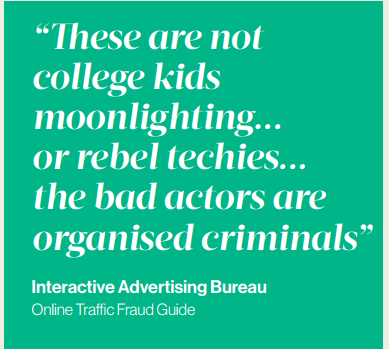
In every case, the bad guys make money by:
• Selling fraudulent ad impressions
• Selling fraudulent traffic to publishers looking for more visitors
• Selling their own ads on other publishers' sites without the publishers' noesis or permission
• Sending fraudulent traffic to affiliate sites in return for a committee
• Creating fraudulent sites that look legitimate and selling advertising on those sites
Disincentives to change
The only way digital ad fraud could accept become so egregious is because nobody cares, WhiteOps CEO Michael Tiffany told Aphorism.
It's an attitude trouble: There is not plenty incentive to fight fraud. No one — advertisers, publishers, ad exchange managers — wants to admit that they've been fooled, wasted money, bought bad inventory, or inflated results.
Also, removing the fraudulent impressions would interpret into lower (simply more accurate) performance reports, lower (but more accurate) traffic reports, and lower (but more than honest) income for advertizement exchanges. In the curt run, it would announced no i would win past eliminating fraud, and a lot of people fear they would be fabricated to wait the fool in the process.
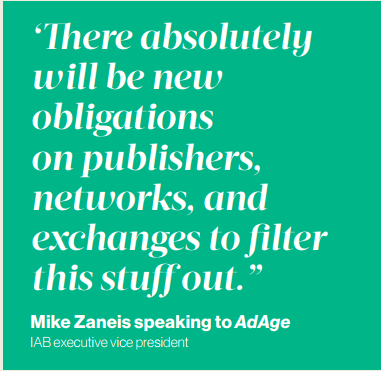
"But past emancipating your people and partners from that fear can we go the cooperation needed to address this event effectively," the ANA report concluded. "Too many people are engaging in acts of omission, where you plough a blind centre, and it'south, 'Well this is common do, everybody buys traffic from this source, and then I'm just doing what everybody else is doing.'" IAB executive vice president Mike Zaneis told Aphorism. "That's not going to be okay anymore."
So how do we trounce these guys?
Many defences against the dark arts have already been defeated: The ANA/WhiteOps study discovered that several tactics publishers and advertisers believe are effective in preventing bots are, in fact, mostly ineffective: "Bots faked all of the engagement and viewability metrics we measured," the study stated.
Viewability does not ensure humanity because fraudster bots tin can fake information technology. Bots record ads every bit viewable when, in fact, they are running in the background or totally invisibly. Actually, viewable impressions in the study skewed slightly higher in bot incidence than non-viewable impressions. And bots have learned to exquisitely mimic homo behaviour, thus defeating engagement metrics.
Another favourite strategy of publishers and advertisers — blacklisting of fraudulent sites — not just requires near real-time updating, but those sites are also quickly and easily replaced by new bad guy sites. Ironically, blacklisting often ends up blocking existent humans besides every bit bots.
"We are [in] an arms race and we're maxim information technology is acceptable to fight this by playing a carnival game: Whack-a-mole," Casale Media vice president/strategy Andrew Casale told the IAB Ad Operations Tiptop in November 2014.
"Nosotros are playing a game with bad guys who have millions of dollars [from] defrauding our ecosystem and nosotros are not winning this game," Casale said. "Whatsoever notion that the volume of these [fraudulent] sites is declining is not what we're seeing. Suspicious new activeness is increasing dramatically, so the game of whack-a-mole is getting harder every 24-hour interval.
"We'll take ane proper name off the chart and cease paying them, only past that point they've probably fabricated thousands or tens of thousands of dollars and they simply get out and spend eight bucks to buy a new domain and they're back in concern.
"If our line of defence against this is to cake one domain at a time, information technology's also deadening," Casale said. "We have to go beyond that to know for each of these clusters who is the organisation we are paying the money to, what'southward the proper name on the check? That's how we can hands place these clusters and tighten up our supply side."
A bank check-listing of defensive and offensive anti-fraud measures
Four of the anti-fraud industry'due south leading executives gave the states their strategies for detecting and preventing advertizing fraud:
Scott Knoll, CEO and president, Integral Advertizing Science:
"Exercise not purchase traffic from anyone else. If yous don't buy traffic, you'll have virtually no fraud."
David Sendroff, founder and CEO, Forensiq:
"The first task is going to sound odd, but it's to make a very serious commitment to fight fraud. Create a publicly stated or corporate statement. Then join the industry's Anti-Fraud Working Group. Membership signifies commitment and helps keep yous up to date."
Andrew Casale, vice president/strategy, Casale Media:
 "The number 1 thing to do is protect and police your identities. Programmatic ownership and selling have go so automated, it's easy for anyone to pretend to be anyone. If you are engaged in programmatic and trading alongside a phantom who has your proper name but is selling it at a fraction of your cost, it is the worst thing in the globe. Enforce your right of trademark.
"Then make sure your partners are as concerned nigh advertising fraud as you are. They are the exchanges where you listing your impressions and tertiary parties where you buy traffic. Look at the neighbourhood of the exchanges where you put your impressions. If you lot spent tens of thousands of dollars to give your 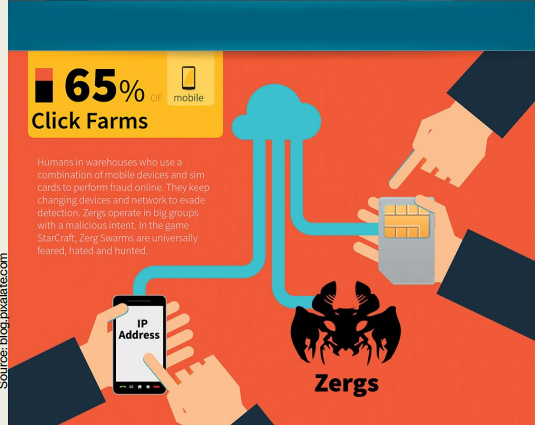 dwelling a loftier market valuation but y'all put it in a really bad neighbourhood, its value will endure. Make sure you are trading alongside publishers of similar status, not a site masquerading equally Disney, which happens every day."
Michael Tiffany, CEO, White Ops:
"Y'all need to make certain your own house is in order first. Nosotros have found over again and once more huge media companies with bot traffic because someone at that organisation who is responsible for growing audience is going to third parties to buy traffic and that third party is giving the publisher bots. The leadership has no idea what'due south going on; as a matter of fact, they are surprised to detect out they take been goosing their audiences by x per cent, which is a big deal because they've been selling their inventory as premium inventory, the about expensive on the market. Practice non pay for fraudulent traffic."
All four executives advocated changing the way advertizement impressions are sold and success is measured.
"The problem is really the industry'due south own error — we've been optimising for quantity and accept created this crazy breeding ground for fraud," said Knoll. "Advertisers are saying we've got to get rid of fraud, merely at some time they're using metrics that encourage fraud. Y'all tin't accept it both ways."
They also all said, no surprise, that publishers should rent companies like themselves to discover and prevent fraud. As self-interested as that sounds, they're absolutely right.
"The benefit of using third party solutions is that nosotros can leverage tech algorithms and huge fraud database," said Integral's Sendroff. "Nosotros look at a couple of trillion bid requests a month. And we have that massive key database. Our systems allow publishers and advertisers to cleanse inventory and traffic before they buy or sell. This is our cadre competency. Fraud is constantly evolving, then information technology is important to have experts." We agree.
Certification and standards were some other popular solution for non just detecting but actually preventing and, eventually, eliminating fraud. "There is no 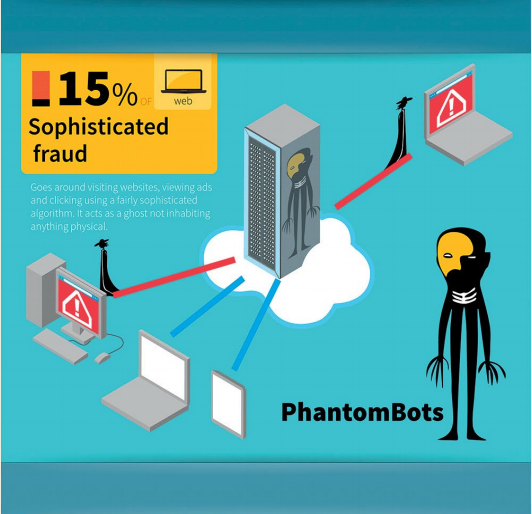 accountability now; too many people tin can hide," said Casale.
"Transparency will ascent, and then if you lot're doing bad things, y'all won't be able to hide and you won't get paid. If you're doing expert things, you should comprehend certification because, while it may be a flake of a burden and may cost coin, you will never again be in the position of having someone making money off your dorsum. As shortly as we make it hard to merchandise and hard to hide and hard to get paid, we will win."
Other strategies: Make exchange floor prices and provider names public
Publishers themselves could take a big pace toward outing fraudsters by simply creating more transparency in their exchanges policies. For case, if 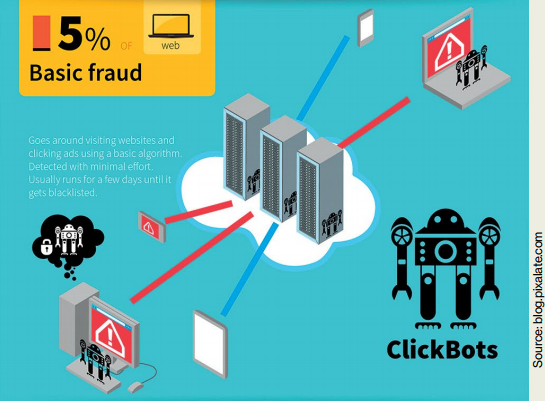 publishers made their floor prices public, advertisers would be instantly alerted of possible fraud when they saw premium inventory listed at prices below the published flooring price.
And the exchanges could have another large footstep with an equally simple but powerful solution: Before placing a bid on an ad exchange for an ad impression, the buyer must be given the name that would appear on the cheque paying for that impression. Instead of relying on domain names (which we've shown tin exist faked), advertisers could rely on the name of the organisation they'll exist paying.
Using this system, advertisers and publishers could create reliable whitelists by including Hearst or Bauer or Kodansha or Abril or Red china Publishing Group — the names that would appear on the cheques – instead of "cosmopolitan.com" or "veja.com" which tin be spoofed.
"We must create conditions where a lot of companies can take the action to make clean the bots out in 2015," said WhiteOps CEO, Tiffany. "If we exercise a better task with transparency and detection, they will make less money and they'll accept less money to make better bots. We need an army of white chapeau hackers to reduce the buying ability of the dark side. If a criminal operator has a selection of type of crimes and the ad fraud turn a profit pool gets smaller, suddenly it is a far less bonny thing to practise. Think almost the effect on market. It would mean putting US$6 billion back in the publishing manufacture!"
The skillful news: The consensus of the antifraud executives is that 2015 will be the beginning of the end of widespread ad fraud.
INNOVATION'S TAKE:
The publishing manufacture has no choice but to start fighting digital advertisement fraud in a coordinated, big-picture, sophisticated fashion. Likewise much money is being lost at a time when every penny counts, and the fraud likewise has the potential to wreck non only our bottom line, just as well our reputation.
Source: https://innovation.media/magazines/how_digital_ad_fraud_affects_everyone
Belum ada Komentar untuk "Advertisements That Make You Think Again"
Posting Komentar